Global Ocean Freight Rates Climb as Strong U.S. Demand and Strategic Capacity Management Offset Easing Port Congestion

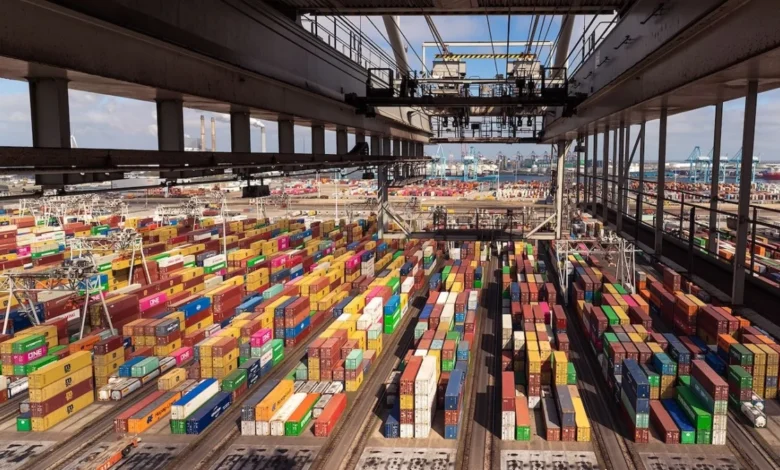
Global ocean freight costs are experiencing renewed upward pressure, driven by resilient consumer demand in the United States and aggressive capacity management by major container shipping lines. According to the latest market intelligence from Drewry’s World Container Index, average global freight rates rose by 2% to reach $4,585 per 40-foot equivalent unit (FEU). This modest yet significant national and international increase highlights the complex interplay of supply and demand forces currently dictating the pace of maritime logistics, even as critical operational bottlenecks at major Asian export hubs begin to clear.
The upward trajectory of shipping costs is not uniform across all trade lanes. Instead, it reflects distinct regional dynamics. On trans-Pacific routes, high volumes of U.S. imports are acting as a primary catalyst, absorbing new vessel capacity and keeping pricing elevated. Conversely, carriers operating on the Asia-Europe trade lanes are actively engineering capacity shortages through strategic blank sailings—scheduled voyages that are intentionally canceled—to manipulate spot rates upward in the face of shifting market fundamentals.
Trans-Pacific Resilience Fueled by Robust U.S. Import Demand
The trans-Pacific trade corridor remains a stronghold for carrier pricing power, bolstered by sustained, robust import demand from the United States. Shippers continue to move high volumes of merchandise across the Pacific, anticipating consumer needs and hedging against potential supply chain disruptions. This steady stream of cargo has successfully cushioned carriers against the downward pricing pressures typically associated with the injection of newly built container ships into the market.
Specific lane data underscores this strength. Drewry’s metrics show that the cost to ship a 40-foot container from Shanghai to Los Angeles increased by 2% week-over-week, settling at $8,007. Concurrently, the Shanghai-to-New York route saw a 1% tick upward, pushing rates to $10,166 per FEU. Market analysts anticipate that trans-Pacific pricing will maintain its footing in the immediate term, with robust American import demand providing a reliable floor for carriers.
Interestingly, this price resilience is persisting despite a temporary relaxation in the number of canceled sailings. Figures from Drewry’s Container Capacity Insight—a comprehensive service that monitors scheduled and canceled voyages, effective capacity, and terminal congestion across major global arteries—indicate that carriers have announced only two blank sailings on the trans-Pacific for the upcoming week. This is a noticeable drop from the six blank sailings recorded the previous week, demonstrating that the sheer volume of cargo is currently sufficient to absorb the additional available capacity without triggering a rate war among competing carriers.
Asia-Europe Carriers Pivot to Aggressive Capacity Management
While the trans-Pacific market relies heavily on organic import demand to sustain rates, the Asia-Europe trade lane is experiencing a more calculated, supply-side intervention. Unlike their trans-Pacific counterparts, ocean carriers operating between Asia and Europe are aggressively pulling capacity from the market to force price appreciation.
Recent rate adjustments on this corridor reflect the efficacy of these measures. Freight rates for shipments originating in Shanghai and arriving in Rotterdam climbed 3% to reach $3,632 per 40-foot container. The increases were even more pronounced on southern European routes, with Shanghai-to-Genoa rates jumping 5% to $4,152 per FEU.
These pricing gains are directly tied to a sharp escalation in blank sailings. For the upcoming week, carriers have announced a total of eight blank sailings on the Asia-Europe route, a significant jump from the two cancellations enforced the previous week. By deliberately tightening available space, shipping lines are successfully exerting upward pressure on freight rates, proving their continued willingness to manage capacity dynamically to protect profit margins.
Operational Relief: Easing Congestion at Major Asian Ports
The upward movement in ocean freight rates comes against the backdrop of a notable operational improvement at major Asian export hubs. For much of the past year, severe port congestion, equipment imbalances, and unpredictable vessel scheduling plagued supply chains, artificially constraining effective capacity and driving freight rates to historic highs.
However, recent data indicates a substantial easing of these pressures. Most notably, vessel waiting times at the Port of Shanghai have plummeted dramatically. During Week 38, cargo ships faced an average waiting time of 97 hours before securing a berth. By Week 42, that figure had dropped to just 38 hours. This dramatic reduction signals a major operational recovery and smoother cargo flows at one of the world’s most critical maritime choke points.
The normalization of port turnaround times typically increases effective vessel capacity by allowing ships to complete round-trip voyages faster. Ordinarily, such an increase in available capacity would exert downward pressure on spot freight rates. The fact that rates have continued to rise—or remain stubbornly high—underscores just how potent current U.S. demand is on the trans-Pacific and how effectively European carriers are offsetting faster ship rotations through coordinated blank sailings.
Geopolitical Pressures and Persistent Security Risks in Choke Points
Beyond traditional supply and demand metrics, international maritime logistics continues to navigate a complex labyrinth of geopolitical tensions and physical security risks, particularly in the Middle East. Vessel movements through the Persian Gulf remain severely restricted due to ongoing security threats and attacks on commercial shipping.
Data for Week 42 highlights the severity of these disruptions, with a mere two containerships venturing into the Persian Gulf, down from five vessels the previous week. Major carriers continue to reroute vessels or avoid the region entirely to safeguard crews and multi-million-dollar assets, adding transit time and operational complexity to voyages touching the Middle East.
Meanwhile, traffic through the Suez Canal—another vital global trade artery—has shown minimal fluctuation. Sailings through the canal ticked up slightly from 54 in Week 41 to 55 in Week 42. While this marginal increase suggests a tentative stabilization of traffic through the Red Sea corridor, overall transit volumes remain far below historical averages as shipping lines continue to weigh the risks of utilizing the shortcut against the extended transit times and fuel costs of routing around the Cape of Good Hope.
Broader Market Implications and Cost Pressures for Importers
The convergence of rising freight rates, strategic capacity management, and lingering geopolitical hazards carries profound implications for global supply chain stakeholders. For cargo owners, retail giants, and industrial importers, the current market environment signals a continuation of elevated logistics expenditures.
Even as operational efficiencies materialize on the ground—exemplified by the drastic reduction in vessel waiting times at Asian ports—these savings are effectively neutralized by carrier interventions. On the Asia-Europe lane, proactive blank sailings ensure that space remains scarce and prices remain firm. On the trans-Pacific lane, relentless American consumer demand ensures that abundant capacity is readily absorbed without causing a collapse in spot rates.
Ultimately, shippers find themselves navigating a volatile ecosystem where freight expenditures are dictated less by natural market equilibrium and more by the deliberate operational strategies of a consolidated container shipping sector. As the industry looks toward the coming quarters, supply chain managers must remain agile, factoring both persistent geopolitical risk and aggressive carrier capacity controls into their long-term procurement and budgeting strategies.